
Renting commercial laundry equipment — rather than purchasing it outright — has become a common approach for laundromats, apartment buildings, and businesses that want predictable costs without a large upfront capital investment. Rental agreements typically bundle equipment access with maintenance and repair support, but understanding how that support actually works, and what's covered versus what isn't, matters just as much as choosing the right machines. How Rental Support Typically Works Most commercial laundry equipment rental agreements include a service component covering routine maintenance and repairs, often with the rental provider handling parts and labor as part of the monthly rental …
Author: Washing Machines Tech
Commercial Laundry Equipment Service Contracts
A well-structured service contract turns unpredictable, reactive repair calls into a planned, budgeted part of running commercial laundry equipment. For businesses ranging from laundromats to hotels to healthcare facilities, service contracts offer a way to lock in maintenance schedules, response times, and often costs — but not all service contracts are structured the same way, and understanding the differences matters before committing to one. Why Service Contracts Make Sense for Commercial Equipment Commercial laundry equipment represents a significant capital investment, and unplanned downtime carries real business costs beyond the repair bill itself — lost revenue, disrupted operations, and in some …
Commercial Laundry Equipment Relocation
Moving commercial laundry equipment is nothing like moving household appliances. Industrial washers can weigh 500 to 3,000 pounds, dryers require specific venting and gas or electrical hookups, and both are precision machines that can be thrown out of calibration by careless handling. Whether a laundromat is relocating to a new storefront, a hotel is renovating its back-of-house, or a linen service is consolidating two facilities into one, planning the move correctly is the difference between a smooth transition and weeks of costly downtime. Why Relocation Is a Specialized Job Commercial washers use large concrete counterweights and suspension systems to control …
Get the best Commercial Dryer Idler Pulley Repair
The idler pulley is one of the most overworked parts inside a commercial dryer, yet it rarely gets a second thought until the machine starts squealing between cycles. This small, spring-loaded pulley keeps the drive belt taut against the motor pulley and the drum, and when it wears out, the entire drum-drive system suffers. For a laundromat or hotel laundry room running dryers nearly around the clock, a failing idler pulley is a small part with an outsized impact on uptime. What the Idler Pulley Does The idler pulley sits on a spring-tensioned arm, pressing against the drive belt to …
Commercial Dryer Blower Wheel Repair
Airflow is everything in a commercial dryer. Without a strong, steady stream of hot air moving through the drum and out the exhaust, clothes take longer to dry, energy costs climb, and lint has more opportunity to build up inside the cabinet. At the center of that airflow system sits the blower wheel, a squirrel-cage fan that pulls air through the heating element and pushes it through the drum and exhaust duct. When it fails or clogs, the whole drying process grinds to a halt. What the Blower Wheel Does The blower wheel is mounted on the motor shaft, usually …
Affordable Commercial Dryer Exhaust Vent Repair
An exhaust vent is the unsung workhorse of a commercial dryer system. It carries hot, moist air out of the building after every single cycle, and in a high-volume laundry operation that can mean thousands of cubic feet of air pushed through the same ductwork every week. When the exhaust vent develops a leak, a crush point, or a blockage, the effects ripple through the entire operation: longer dry times, higher utility bills, and in serious cases, a real fire hazard from trapped lint and heat. Why Exhaust Vents Fail Vent failures generally fall into a few categories: physical damage …
Efficient Commercial Dryer Lint Trap Repair
The lint trap is the first line of defense against one of the most common causes of commercial dryer downtime and fire risk. It's also one of the most frequently neglected parts of the machine, precisely because it seems too simple to fail. But lint traps do wear out — screens tear, housings crack, and gaskets degrade — and when they do, lint that should be caught at the source ends up further down the airflow path where it's much harder to remove. How the Lint Trap Works Air pulled through the drum by the blower wheel passes through the …
Reliable Commercial Dryer Moisture Sensor Repair
Modern commercial dryers rely on moisture sensors to know when a load is actually dry, rather than running on a fixed timer that either overdries fabric or shuts off too early. These sensors — usually a pair of metal strips inside the drum — measure electrical conductivity in damp fabric and signal the control board to end the cycle once the load reaches the target dryness. When a moisture sensor fails or reads inaccurately, cycles run too long, energy costs climb, and fabric takes unnecessary wear from overdrying. How Moisture Sensors Work As clothes tumble past the sensor strips, damp …
The best Commercial Dryer Control Board Repair
The control board is the brain of a modern commercial dryer, coordinating everything from cycle timing and heat levels to moisture sensor readings and safety cutoffs. When it malfunctions, symptoms can range from a machine that won't start at all to one that behaves erratically mid-cycle. Because the control board touches nearly every other component, diagnosing a board issue correctly — rather than replacing parts at random — is one of the most valuable skills in commercial dryer repair. What the Control Board Manages On most commercial dryers, the control board handles cycle selection, heating element timing, motor operation, door …
Commercial Dryer Timer Repair By Washing Machines Tech
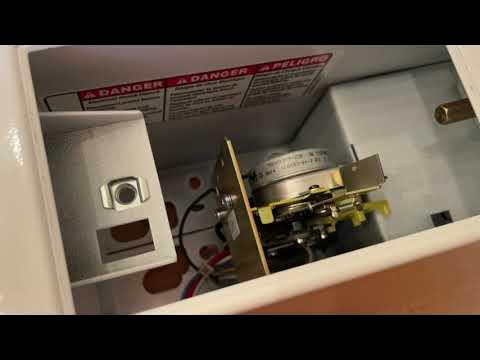
Not every commercial dryer runs on a digital control board — many mid-range and older units still rely on a mechanical or electromechanical timer to control cycle length. These timers use a motor-driven cam system to advance through the drying cycle, switching heat and tumble functions on and off at set intervals. When a timer fails, a dryer might not advance past a certain point in the cycle, run continuously without stopping, or fail to start heating at all. How Mechanical Timers Work Inside a timer assembly, a small synchronous motor slowly rotates a set of cams. Each cam controls …
Commercial Dryer Door Switch Repair
The door switch is a small safety component with an outsized job: making sure the dryer only runs when the door is fully closed. It seems simple, but a faulty door switch is one of the most common reasons a commercial dryer refuses to start, or worse, stops mid-cycle without warning. Because it's a safety-critical part, door switch issues should never be bypassed — they need proper diagnosis and repair. How the Door Switch Works Most commercial dryers use a spring-loaded plunger switch mounted in the door frame, triggered by a strike plate on the door itself. When the door …
Commercial Dryer Electrical Repair By Washing Machines Tech
Commercial dryers, especially larger gas and electric units, draw significant power and rely on a network of wiring, fuses, relays, and terminal connections to distribute it safely. Electrical faults are among the more serious issues a laundry operation can face, since they carry real safety risk alongside the operational disruption of a machine going down. Understanding how to systematically diagnose and repair electrical faults — rather than guessing at parts — is essential for any technician working on these machines. Common Sources of Electrical Faults Electrical problems in commercial dryers typically trace back to a handful of recurring causes: loose …