
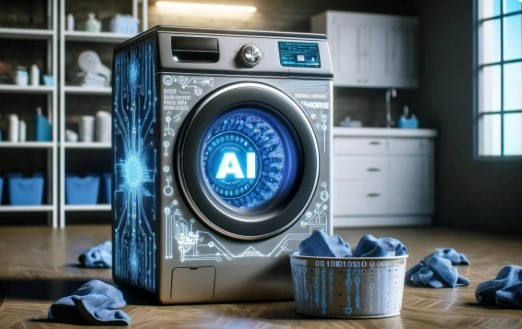
Artificial intelligence (AI) is changing the way household appliances operate, and washing machines are among the appliances benefiting from this technological transformation. In 2026, modern washing machines are increasingly equipped with intelligent sensors, connected controls, adaptive washing programs, and AI-powered systems designed to improve cleaning performance while reducing water, detergent, energy, and time consumption.
AI integration in washing machines combines sensors, software, machine learning, connectivity, and automated decision-making. Instead of relying entirely on fixed washing programs, an AI-enabled washing machine can assess the load, recognize washing conditions, and adjust selected settings according to the information it receives.
“The modern washing machine is evolving from a programmable appliance into an intelligent household system capable of adapting its operation to everyday laundry conditions.”
What Is AI Integration in Washing Machines?
Traditional washing machines generally operate according to predetermined programs. A user selects options such as cotton, synthetic, delicate, quick wash, or heavy duty, and the machine follows a programmed sequence.
AI-enabled machines take a more adaptive approach. Sensors can collect information about the laundry load, water conditions, drum movement, temperature, and other operating factors. Software then processes this information to determine how the machine should operate.
Depending on the model, AI features may automatically adjust washing time, water quantity, drum movements, temperature, spin speed, or detergent use.
The objective is not simply to make a washing machine more complicated. The objective is to make it more efficient, responsive, convenient, and capable of delivering consistent washing results.
1. Automatic Load Detection
One of the most useful applications of AI is intelligent load detection.
Modern washing machines can use sensors to estimate the amount of laundry placed inside the drum. AI-supported systems can use this information to determine an appropriate amount of water and washing time.
For example, a small load does not necessarily require the same quantity of water or operating time as a full load. Intelligent load sensing can therefore help reduce unnecessary consumption.
This feature is particularly useful for households that wash different quantities of clothing throughout the week.
2. AI-Based Fabric and Wash-Cycle Recognition
Some advanced washing machines can identify characteristics of a laundry load and recommend or automatically select an appropriate washing program.
AI systems may use information from sensors and user-selected preferences to distinguish between different laundry requirements. The machine can then modify drum movement, temperature, rinse cycles, and spin speed.
This can help reduce the risk of using an unnecessarily aggressive washing cycle on delicate clothing.
AI-assisted fabric care is also becoming important as consumers seek to extend the useful life of their clothes.
3. Intelligent Water Management
Water efficiency is another major area where AI integration in washing machines can provide benefits.
Instead of using a fixed amount of water for every cycle, intelligent systems can adjust water consumption according to load conditions.
Sensors can determine whether the drum contains a small, medium, or larger load. Software can then help calculate an appropriate water level.
For households and commercial laundry facilities concerned about water consumption, intelligent water management can contribute to lower operating costs.
4. Optimized Detergent Use
Some premium washing machines now incorporate automatic detergent dispensing systems. AI can complement these systems by helping determine the quantity of detergent needed according to the laundry load and selected washing conditions.
Overdosing detergent can leave residues on clothing and increase costs, while insufficient detergent may produce poor cleaning results.
Automated dosing can make detergent consumption more consistent and reduce the need for users to manually measure detergent for every wash.
5. Energy-Efficient Washing
AI can also contribute to energy management.
A washing machine can use information from sensors and programmed operating conditions to optimize heating, motor operation, cycle duration, and other energy-consuming functions.
When combined with efficient inverter motors and improved heating systems, intelligent control can help reduce electricity consumption.
For users operating washing machines frequently, even relatively small efficiency improvements can become significant over many washing cycles.
“AI does not replace efficient hardware; it makes efficient hardware work more intelligently by coordinating different components according to actual operating conditions.”
6. Smart Sensors and Predictive Maintenance
One of the most promising developments in AI integration in washing machines in 2026 is predictive maintenance.
A washing machine contains several components that can develop faults, including the motor, drain pump, water inlet valve, bearings, heating element, door lock, suspension system, and electronic control board.
Intelligent sensors can monitor operating conditions such as vibration, temperature, water flow, motor behavior, and cycle performance.
AI software can potentially identify unusual patterns before a complete breakdown occurs.
For example, abnormal vibration could indicate an unbalanced load or a developing mechanical problem. Repeated drainage problems could also trigger diagnostic information.
Instead of waiting until the washing machine stops working, users may receive an alert recommending inspection or maintenance.
7. Remote Monitoring Through Smartphone Apps
Connectivity has become an important part of modern washing machines.
Wi-Fi-enabled appliances can communicate with smartphone applications, allowing users to monitor washing cycles remotely. Depending on the manufacturer and model, users may be able to start or stop certain functions, receive cycle notifications, review diagnostic information, and receive maintenance alerts.
For busy households, remote notifications can be particularly convenient. A user does not necessarily have to remain beside the appliance waiting for a cycle to finish.
Connected appliances can also provide service technicians with useful diagnostic information when troubleshooting certain faults.
8. Personalized Washing Programs
AI can learn from repeated user behavior.
If a household frequently uses particular programs, temperatures, or spin settings, an intelligent appliance may make those options easier to access or recommend them based on usage patterns.
Personalization can make washing machines easier to operate because users spend less time manually configuring every cycle.
Over time, the appliance can become better aligned with the household’s laundry habits.
9. AI and Washing Machine Fault Diagnosis
Another important development is intelligent fault detection.
Modern appliances can generate error codes when specific problems occur. AI-enabled systems can go further by combining error information with sensor readings and historical operating data.
A connected washing machine could identify symptoms associated with drainage problems, excessive vibration, water supply issues, overheating, or abnormal motor behavior.
This information can help users understand whether a simple action, such as redistributing laundry, may solve the problem or whether professional appliance repair is required.
For appliance repair companies, better diagnostic information can also make service visits more efficient.
10. The Role of AI in Commercial Laundry
AI integration is not limited to household washing machines.
Hotels, hospitals, laundries, restaurants, schools, and other organizations can benefit from intelligent commercial laundry equipment.
Large-scale laundry operations can use data from connected machines to monitor machine utilization, energy consumption, water usage, maintenance requirements, and operating efficiency.
AI can help identify patterns and support decisions about maintenance schedules and machine utilization.
This can be particularly valuable where washing machines operate for many hours each day.
Benefits of AI-Integrated Washing Machines
The major benefits include:
- Better washing-cycle optimization
- Reduced water consumption
- Potentially lower electricity consumption
- More accurate detergent dosing
- Improved fabric-care management
- Remote monitoring
- Personalized washing programs
- Early fault detection
- Predictive maintenance
- Improved convenience
- Better operational data for commercial users
However, AI does not make a washing machine maintenance-free. Filters still need cleaning, hoses require inspection, the machine must be properly installed, and mechanical components can still wear out.
Challenges of AI Washing Machines
Despite their advantages, intelligent washing machines also introduce challenges.
Advanced electronics can make appliances more expensive than conventional models. Connectivity can also introduce cybersecurity and privacy considerations. Users may additionally require reliable internet connectivity to access some smart features.
Another consideration is repair complexity. AI-enabled appliances may contain sophisticated electronic control boards, sensors, communication modules, and software systems that require trained technicians for diagnosis and repair.
Consequently, buyers should consider not only the purchase price but also warranty coverage, availability of spare parts, software support, and access to qualified appliance repair services.
Future of AI in Washing Machines
The development of AI integration in washing machines is likely to continue beyond basic automation. Future appliances may become increasingly capable of combining information from multiple sensors, household energy systems, detergent systems, and connected devices.
AI could eventually provide more accurate predictions about component failure, optimize washing according to electricity tariffs, improve fabric-care recommendations, and coordinate laundry schedules with other smart-home systems.
The most important development, however, will be practical intelligence: machines that require less manual adjustment while delivering reliable cleaning performance efficiently.
AI is becoming an important part of washing machine technology in 2026. From automatic load detection and water management to predictive maintenance, remote monitoring, intelligent diagnostics, and personalized cycles, artificial intelligence is helping transform washing machines into more adaptive appliances.
For consumers, these developments can mean greater convenience and potentially lower resource consumption. For commercial laundry operators, intelligent monitoring and predictive maintenance can improve equipment management and operational efficiency.
As technology continues to develop, AI integration in washing machines is likely to become increasingly common, making intelligent laundry appliances an important part of the connected home and modern laundry industry.