
A cross-section of a front-loading washer showing parts & functions
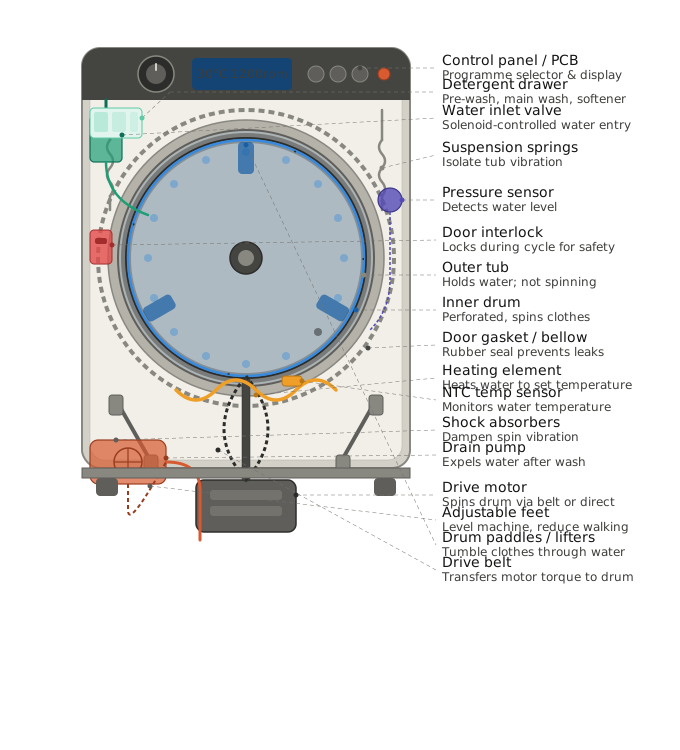
1. Control panel / PCB (printed circuit board)
The brain of the machine. The PCB interprets the user’s programme selection and coordinates every other component throughout the cycle — opening and closing the inlet valve, activating the heater, controlling motor speed, monitoring sensors, and triggering the drain pump at the right moments. Modern machines use a microprocessor running pre-programmed wash algorithms, with sensors feeding real-time data back to it continuously.
2. Detergent drawer
A sliding tray divided into compartments: one for pre-wash detergent, one for the main wash detergent, and one for fabric softener. Water from the inlet valve flows through each compartment at the correct moment in the cycle, flushing the chemical into the outer tub. The flow path is managed by a siphon effect in the softener compartment, so softener only enters during the final rinse.
3. Water inlet valve
A solenoid valve — electrically operated — that opens to admit cold (or hot) mains water into the machine. The PCB controls it precisely: it opens to fill the tub to the level determined by the pressure sensor, then closes. Most machines have two valves: one for each water temperature feed. A faulty inlet valve is one of the most common causes of a machine not filling or overfilling.
4. Outer tub
A large plastic or stainless steel drum that sits fixed inside the cabinet and holds the water. It does not spin. The inner drum rotates inside it. The outer tub is sealed to contain water, connected to the inlet at the top and the drain pump at the bottom, and supported by the springs and dampers. Because it sits on a suspension system, it can move slightly during the spin cycle without transmitting vibration to the cabinet.
5. Inner drum (stainless steel drum)
The perforated rotating cylinder that directly contacts the clothes. Perforations allow water and detergent to flow freely in and out. It is connected to the motor via the drive shaft and spins at different speeds depending on the cycle stage — slow tumbling during washing (typically 40–60 rpm), faster during rinses, and very fast during the spin (600–1600 rpm) to centrifuge water out of the clothes. Made from stainless steel in all modern machines for corrosion resistance.
6. Drum paddles / lifters
Three curved fins moulded into the inner surface of the drum at 120° intervals. As the drum rotates, they pick up laundry and drop it back into the water, ensuring all items are repeatedly submerged and agitated. Without paddles, clothes would simply rotate with the drum without any tumbling action and wash performance would be very poor.
7. Door gasket / bellows seal
A large accordion-shaped rubber seal that connects the front of the outer tub to the door aperture in the cabinet. It creates a watertight seal and also flexes to accommodate the movement of the outer tub during spin without tearing. Debris and lint collect in its folds, and it is one of the most common sites for mould growth if the door is kept closed after a wash. The inner lip of the gasket also catches small items (coins, hairgrips) that slip out of pockets.
8. Door interlock
An electromechanical latch that physically prevents the door from being opened once a cycle starts and water is present. It is controlled by the PCB. Most interlocks have a thermal delay or a mechanical bimetal strip that means the door stays locked for 1–2 minutes after the cycle ends, allowing the drum to decelerate safely. A failed door interlock is a very common fault that prevents a machine from starting at all.
9. Heating element
A resistive heating coil mounted at the bottom of the outer tub, submerged in the wash water. It heats water to the temperature selected on the programme dial (typically 30°C, 40°C, 60°C, or 90°C). The PCB switches it on and off based on readings from the NTC temperature sensor. A limescale-encrusted element is very inefficient and is the most common cause of poor wash performance at high temperatures.
10. NTC temperature sensor
A negative temperature coefficient thermistor — a component whose electrical resistance drops as temperature rises. Mounted near the heating element, it gives the PCB a continuous real-time water temperature reading so heating can be precisely cut off at the target temperature. It also protects the element from overheating if the tub has drained dry.
11. Pressure sensor (water level sensor)
Connected to the bottom of the outer tub via a thin rubber or plastic tube. As water fills the tub, the air column in this tube compresses, and the sensor detects the pressure change. Different pressure values correspond to different water levels (empty, half-load, full-load). The PCB uses this to know when to stop filling and when it is safe to begin heating or draining.
12. Drive motor
The motor that rotates the drum. Traditional machines use a brushed AC induction motor connected to the drum via a rubber drive belt and a pulley on the drum shaft, with speed controlled by varying current. Modern premium machines increasingly use brushless DC inverter motors (direct drive) that bolt directly to the rear of the outer tub with no belt, offering quieter operation, lower energy use, and longer lifespan.
13. Drive belt
A thick rubber belt that loops around a small motor pulley and a large pulley attached to the drum shaft. Because the drum pulley is much larger in diameter than the motor pulley, the drum turns at a much lower RPM than the motor — this gearing provides the torque needed to spin a full load of wet laundry. Belts wear and stretch over time and eventually slip or snap, resulting in the drum not spinning even though the motor is running.
14. Suspension springs
Two or three coil springs that hang the outer tub from the top of the cabinet frame. They allow the tub to oscillate vertically and laterally during the spin cycle, preventing the full force of an unbalanced load from being transmitted to the cabinet walls. Without springs, the machine would “walk” across the floor violently during spin.
15. Shock absorbers / dampers
Hydraulic or friction dampers connecting the bottom of the outer tub to the base of the cabinet. They work in concert with the suspension springs: the springs allow movement, the dampers slow and control that movement. Together they form a passive vibration isolation system. Worn dampers are the primary cause of excessive vibration and noise on spin.
16. Drain pump
An electric centrifugal pump that draws water from the bottom of the outer tub and forces it out through the drain hose. It operates at the end of the wash and rinse stages. Most drain pumps have a filter accessible from the front of the machine that catches lint, coins, and small objects before they can damage the pump impeller. A blocked filter is the most common cause of a machine failing to drain.
17. Adjustable feet
Four threaded feet at the base of the cabinet that can be screwed in or out to level the machine on uneven floors. Correct levelling is critical — a machine that is not level will have an unbalanced load on every cycle, causing excessive vibration, noise, and premature wear of the bearings and suspension components.