
A faulty water inlet valve is usually tested by checking both its electrical continuity and its water flow behavior. If the coil fails continuity testing or the valve gets strong supply water but still restricts flow, replacement is usually the answer.
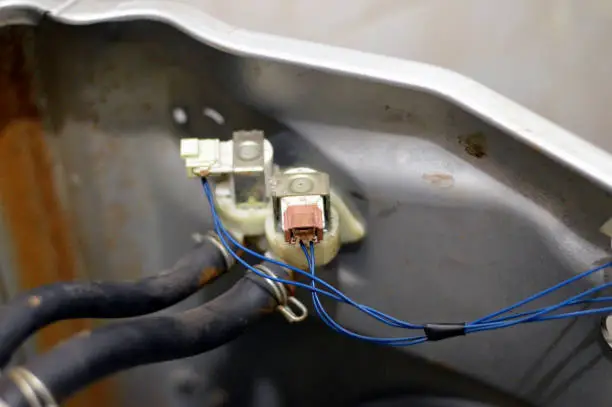
What the valve does
The water inlet valve opens when the washer calls for water and closes when the fill is complete. If it sticks open, the machine may overfill; if it sticks closed or opens weakly, the washer may fill too slowly or not at all. Because of that, testing should cover both electrical and mechanical issues.
Safety first
Unplug the washer and shut off both water supplies before touching the valve. This prevents electric shock and stops water from spilling when hoses are removed. Keep a towel or small container nearby because a little water often remains in the hoses.
Test with a multimeter
Disconnect the electrical connector from the valve, then set your multimeter to the lowest ohms or continuity setting. Touch the probes to the two terminals of each solenoid coil. A good coil should show continuity, and one repair guide notes a typical resistance range of about 500 to 1,500 ohms, while another cites 100 to 500 ohms depending on the appliance type. If the meter shows no continuity or a reading far outside the expected range, the coil is likely bad and the valve should be replaced.
Check the water flow
If the electrical test passes, check whether the valve is mechanically restricted. Turn off the water, disconnect the supply hoses from the valve, aim them into a bucket or tub, and turn the water back on briefly. A strong flow means the household supply is fine, while a weak flow points to a supply issue; if supply is strong but the washer still fills poorly, the valve itself is probably restricted or failing mechanically. In that case, replacement is usually recommended rather than trying to clean an old valve.
Signs of a bad valve
Common symptoms include slow fill, no fill, overfilling, leaking into the tub when the washer is off, or no hot or cold water entering the machine. A humming valve that does not pass water, or intermittent filling that changes from cycle to cycle, also points toward a failing inlet valve. If only one side, hot or cold, is affected, that can help identify which solenoid is failing.
When to replace it
Replace the valve when the coil fails continuity, the valve is mechanically restricted, or the washer keeps behaving the same after cleaning the screens and confirming good supply pressure. In many washers, the valve is not worth rebuilding because a weak or worn internal mechanism often fails again. After replacement, reconnect the hoses carefully, restore power and water, and run a fill test to confirm normal operation.
A multimeter test plus a quick water-flow check will tell you most of what you need to know about the valve. When both tests point to trouble, the safest and most reliable fix is usually a full replacement.